
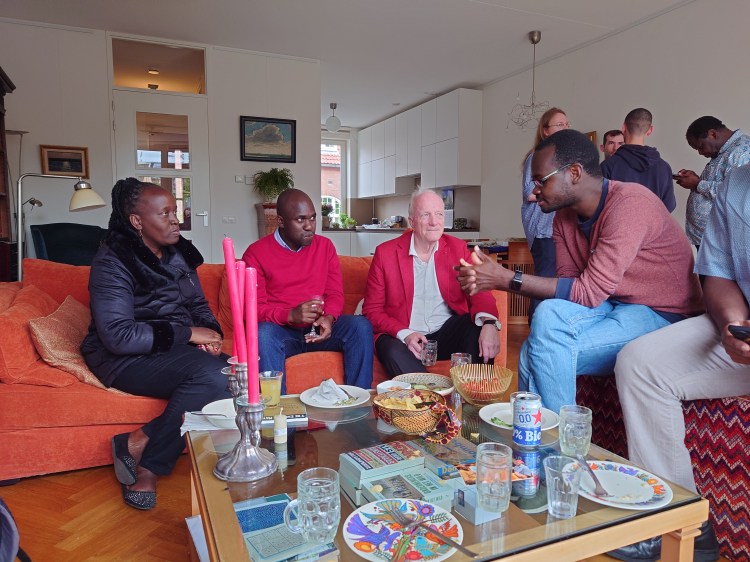
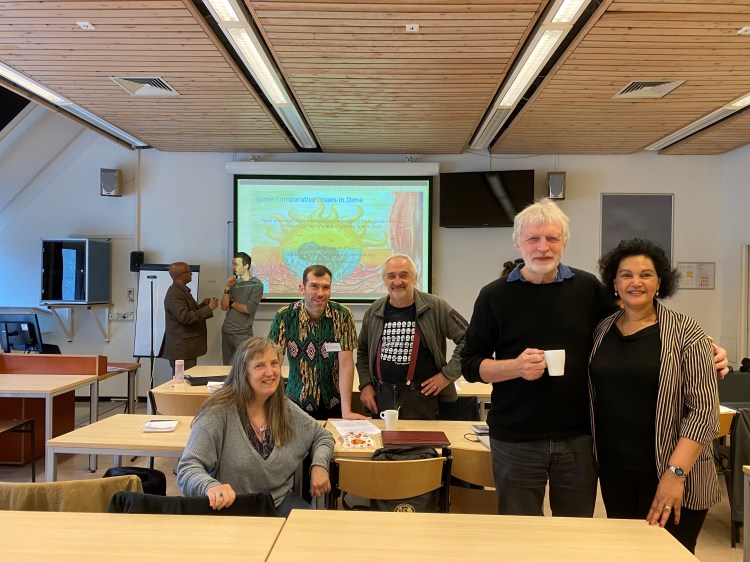
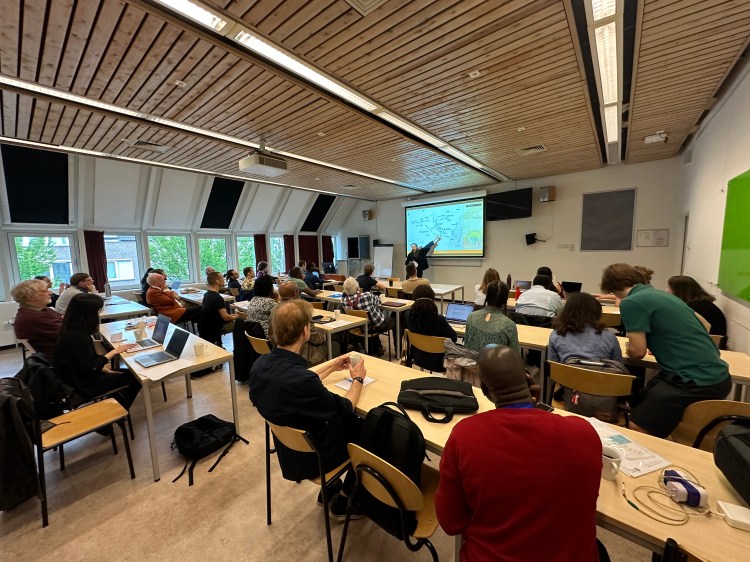
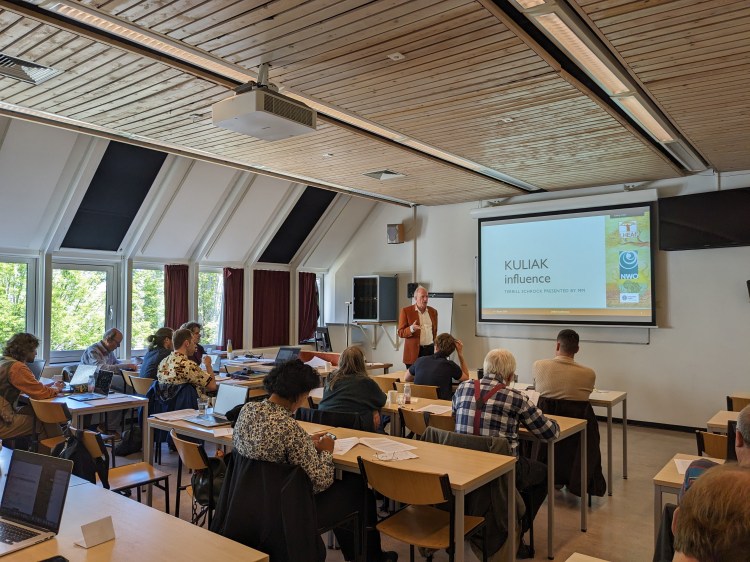
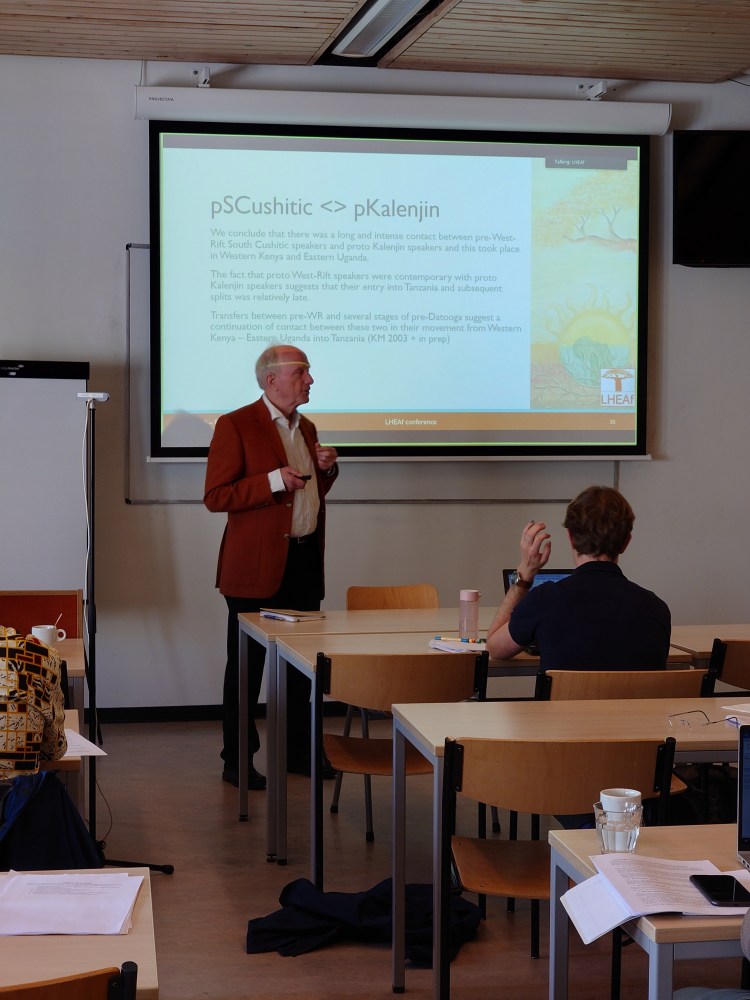
From 6-8 June 2024, the final conference of the LHEAf project took place in Leiden and online. Many thanks to all those who contributed to making this a wonderful event!
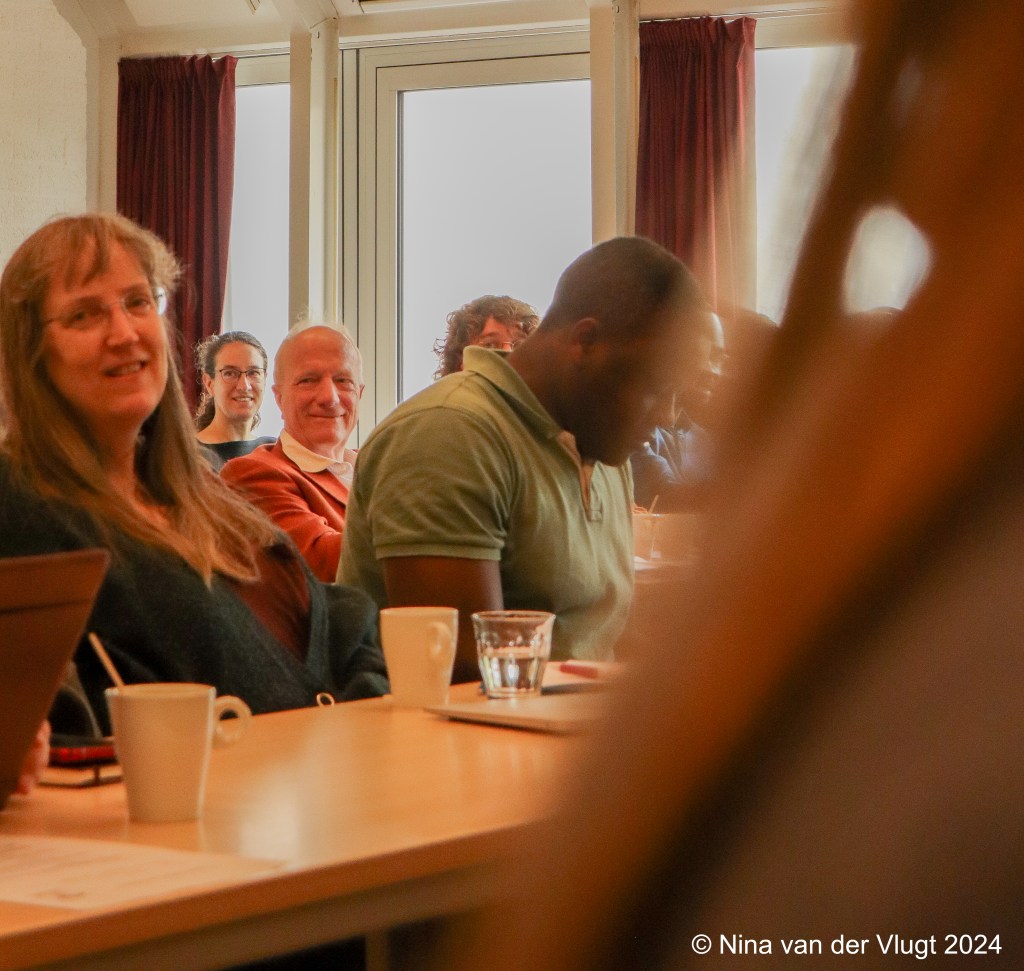
Impressions
Slides of the presentations
Day 1: Thursday, 6 June
| 08.30 – 09.00 | Registration & tea/coffee |
| 09.00 – 09.15 | Introduction |
| 09.15 – 10.45 | Proto East Cushitic Ahmed Sosal Cushitic in the mountains of Taita, Pare, Usambara and Kilimanjaro Ed Elderkin, Maarten Mous, Derek Nurse, Gérard Philippson, Christian Rapold, Sjef van Lier, Bonny Sands, Ahmed Sosal, Mauro Tosco |
| 10.45 – 11.15 | Break |
| 11.15 – 12.45 | South Cushitic in Inner Mbugu: Historical Linguistics and Linguistic History in the Tanzania Rift Andrew Harvey The late entry of Cushitic in Tanzania Maarten Mous, Christian Rapold, Roland Kiessling |
| 12.45 – 14.00 | Lunch |
| 14.00 – 15.30 | The multitude of Cushitic and Nilotic contacts Roland Kiessling, Maarten Mous, Christian Rapold Kuliak influence Terrill Schrock, Maarten Mous Narrations of Precolonial Society among the Terik of Western Kenya Eliud Biegon |
| 15.30 – 16.00 | Break |
| 16.00 – 17.00 | Discussion: Which speakers were where in the pastoral neolithic in Tanzania? Movements of the Cushitic and Nilotic peoples in East Africa. |
| 18.00 | Conference Dinner |
Day 2: Friday, 7 June
| 08.30 – 09.15 | Tea/coffee |
| 09.15 – 10.45 | The donkey in East Africa Sjef van Lier Changing the leopard’s spots: changing and exchanging color pattern and megafauna terms Sam Beer |
| 10.45 – 11.15 | Break |
| 11.15 – 12.00 | Some Comparative issues in Dime Mulugeta Seyoum |
| 12.00 – 13.15 | Lunch |
| 13.15 – 14.45 | The Bantu expansion into East Africa through contact Nina van der Vlugt, Maarten Mous On the non-Bantu origins of reflexive-reciprocal polysemy in Tanzanian Bantu languages Aron Zahran |
| 14.45 – 15.15 | Break |
| 15.15 – 17.00 | Bantu Migratory Routes into Kenya and Tanzania: Implications on Luyia Dialects Classification Everlyn Kisembe, Duncan Mukhwana Discussion: Bantu in contact in East Africa |
Day 3: Saturday, 8 June
| 09.30 – 11.15 | The sound systems of Rift Valley languages: New perspectives on their form and evolution Didier Demolin Assessing the past cultural diversity of East Africa Steven Goldstein, Tom Güldemann |
| 11.15 – 11.45 | Break |
| 11.45 – 12.30 | Herders without horde or hunters without history? Investigating the history of East-African hunter-gatherers Dominique Loviscach |
| 12.30 – 13.45 | Lunch |
| 13.45 – | Sandawe language contact: Towards a linguistic map of early Tanzania Alba Hermida Rodriguez Early East African and Cushitic: Contacts between foragers and pastoralists in early East Africa Bonny Sands, Mauro Tosco Discussion: How to find out about earlier people |
| Drinks |

Project outcomes: Main results
We re-assessed the position of South Cushitic within Cushitic, given the controversy whether it should be considered as part of East Cushitic or not. We conclude that South Cushitic is not part of East Cushitic but higher in the Cushitic historical tree. This suggests an early move of South Cushitic speaking people from Ethiopia southwards [1]. The apparent East Cushitic properties in proto South Cushitic are due to East Cushitic influence, in particular from Oromo and, earlier, from a precursor of the Yaaku-Dullay languages (Kiessling, Mous, Rapold in prep.; Mous 2023c). This suggests a late entry of South Cushitic into Tanzania given the fact that the separation of Oromo is an event that occurred less than 1000 years ago. There is no linguistic evidence for Cushitic speakers in Tanzania before 1000 BP [2]. Apart from linguistic contact with Yaaku-Dullay and Oromo, proto South Cushitic was also in contact with proto-Kalenjin (Mous in prep.). South Nilotic (Kalenjin and Datooga) and Cushitic have had intense contact at several points in time to an extent that it seems futile to distinguish cultures on the basis of language families: proto OmoTana East Cushitic influenced proto South Nilotic to the extent that all decimal numbers were taken from Cushitic; in addition, there was some influence of West OmoTana East Cushitic on proto South Nilotic; East OmoTana had influence on proto Kalenjin (Mous and Rapold 2023). The geography of these contacts remain to be established. The linguistic evidence to establish the pathway of South Cushitic into Tanzania is inconclusive; partly because we consider Aasáx not closely related to the core of South Cushitic (Kruijsdijk 2023 , Mous 2023a), because earlier research established that Ma’á is not South Cushitic but a register to a Bantu language and the oldest layer in this register is East Cushitic (Mous 2001), rendering a eastern route uncertain. We try to reach insight into this spread and the spread of Bantu languages into East Africa by careful reconsideration of the many Cushitic+Nilotic loans (in particular in the area of animal husbandry) that have entered different groups of Bantu languages at different points in time and place (Mous 2023b, Taita working group in prep.). East Cushitic loans can be diagnosed with greater precision based on a revised and expanded reconstruction of proto OmoTana (Sosal in prep). We hope to address the (historical-linguistically) most challenging issue at the conference: the early presence of languages that are not Bantu, Cushitic, Nilotic in East Africa. We are working on a map (Loviscach in prep) to present the overwhelming multitude of hunter-gatherer groups and of memories of prior inhabitants. Linguists tend to hypothesise language shift for these hunter-gatherer groups where anthropologists and historians suggest change of food production. We are looking forward to discussing the dynamics and nature of such groups both linguistically and culturally. The contact situation between Sandawe, Hadza and Cushitic suggests a balanced relationship of mutual influence. References can be found here.
[1] Indications such as Ethiopia, Kenya, Tanzania are meant to be fuzzy approximations of a geographical area.
[2] Historical linguistics does not offer absolute dating. Time indications require external evidence.
 LHEAf
LHEAf 