


Unravelling East Africa’s Early Linguistic History
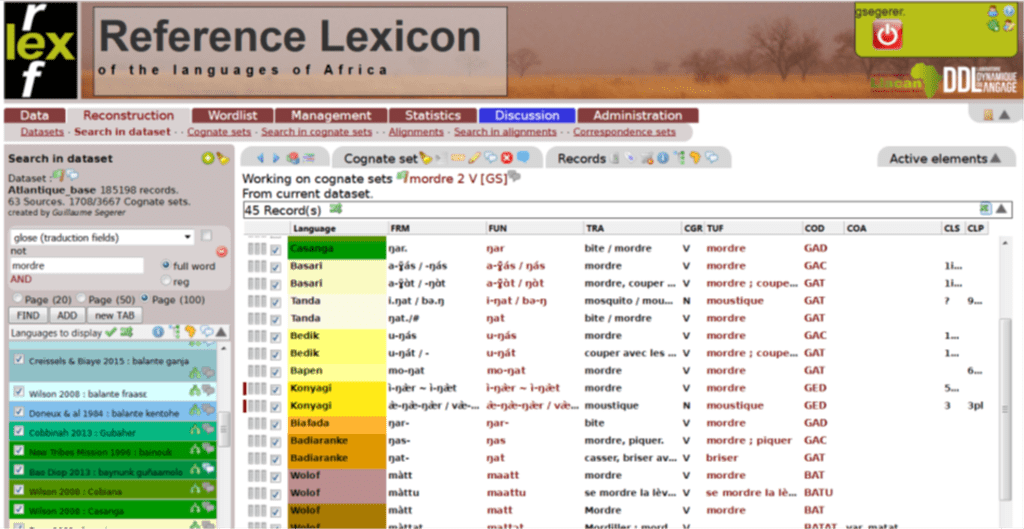
This project aims to reconstruct the earliest possible linguistic history of East Africa with focus on Tanzania and Kenya. The goal is a comprehensive overview of the linguistic history of East Africa in the last five thousand years. In the traditional view, East Africa was populated by KhoiSan speaking hunter-gatherer communities before successive populations of Cushitic, Bantu, and Nilotic people moved in, bringing agriculture, animal husbandry, and iron. Recent advances in archaeology show a more complex picture. Also, genetic studies have become available, including studies on ancient DNA and cattle. Furthermore, historical linguists no longer consider East African Khoi-San languages as related. It is therefore time to fully reconsider how the linguistic evidence relates to the early populations. In the last decades, new lexical and grammatical data has become available. This project provides an open on-line database containing this lexical material with a critical evaluation of its origins (project 1). In order to establish a new timeline for the language history of East Africa, we develop a revised and drastically expanded linguistic reconstruction of Proto Core Cushitic (project 2), and of South Omotic (project 3). This will result in an inventory and evaluation of linguistic evidence for the early human presence in the area, and as the input for an interdisciplinary workshop with archaeologists and geneticists that will provide a new and detailed picture for the peopling of East Africa, linking linguistic groups with archaeological finds and DNA results.
project 1
Christian Rapold (PD) and Maarten Mous (PI)
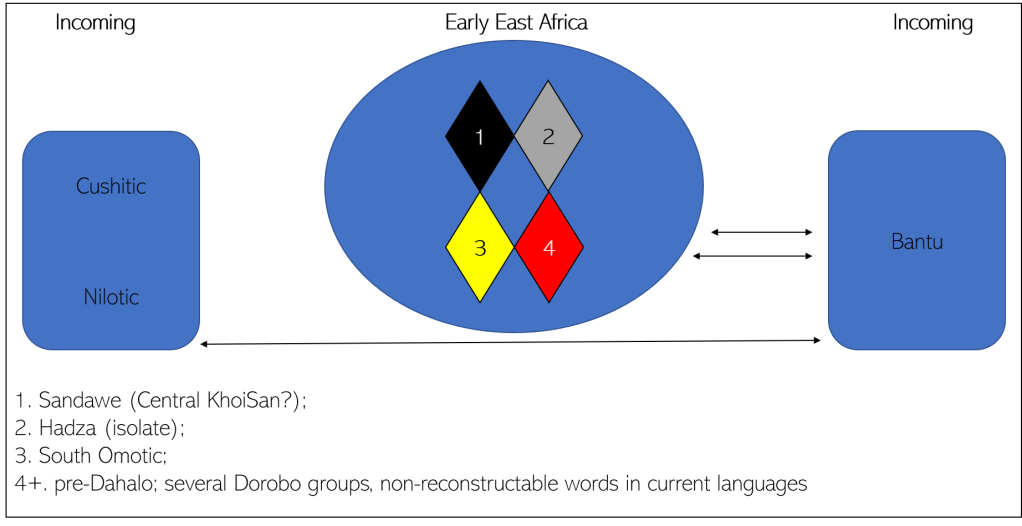
The Cushitic, Bantu, and Nilotic are major incoming families in East Africa but not necessarily one migration each, and chronological order needs to be re-evaluated. This subproject envisages to study the other factors or language families, possibly vanished ones.
Traces of language contact are at the heart of the project 1. We use evidence of lateral transmission between languages to reconstruct parts of the linguistic and cultural history of East Africa. Our focus is on the lexicon, but we also investigate phonology, morphology and syntax.
project 2
Ahmed Sosal (PhD)
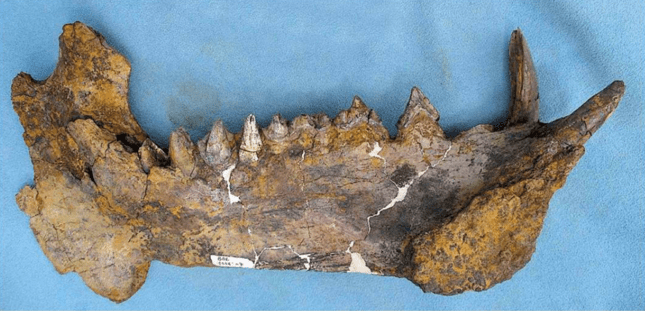
Given the great relevance of the Cushitic languages as the claimed first newcomer in East Africa from the north, project 2 entails an extensive historical reconstruction of Cushitic. Most previous studies were done in 1970s and 1980s such as Black, Sasse, and Heine. This subproject aims to develop a revised and expanded lexical and phonological reconstruction of Proto Core Cushitic based on existing and new low-level reconstructions.
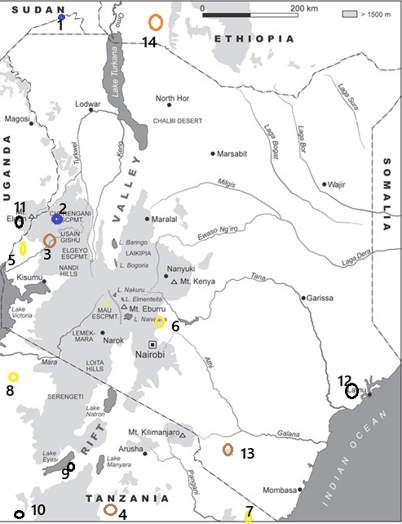
- proto South Nilotic
- proto Kalenjin+Datooga
- PreTanzanian South Cushitic
- Proto Tanzanian South Cushitic
- Proto EA Bantu
- Proto Central Kenyan Bantu
- Proto NE Coastal Bantu
- Proto Takama Bantu
- Hadza
- Sandawe
- Kuliak
- Dahalo
- Kenyan South Cushitic
- pre-Oromo
project 3
Reconstruction of South Omotic is important to have yet a further language family to link vocabulary to. In researching the lexical history of East African languages we encounter a large amount of items that we cannot link to Bantu, Cushitic, Nilotic, Sandawe or Hadza. We have found a few lexical links between South Omotic and Sandawe and other languages in the Tanzanian Rift Valley, at an incredible distance. In order to understand this connection we need to dig deeper in South Omotic. The lexical reconstruction of South Omotic is pioneering work and will require some additional collection of lexical material. The group consist of roughly four languages: Hamar, Karo, Dime, Aari. There is hesitation with some authors to classify this group as Omotic and Afroasiatic. Firew Elias will reconstruct the linguistic history of South Omotic under the guidance of Dr. Mulugeta Seyoum from Addis Ababa university.
Results
The dominant view on the history of East Africa is that for a long period of time it was occupied by hunter-gatherers, some speaking click languages, probably related to those in South Africa. South Cushitic speakers introduced animal husbandry and were present all over East Africa for the last 4000 years. Some 2000 years ago Bantu agriculturalists arrived in East Africa and later Nilotic speakers. Our research changes this scenario drastically. The early presence of South Cushitic is valid for Kenya but not for Tanzania. The numerous non-Bantu loans can for a large part not be linked to South Cushitic. Moreover the South Cushitic languages were in contact with South Nilotic and crucially with Oromo before they entered Tanzania and this was much later. The Cushitic words in Bantu languages were largely picked up East of Lake Victoria for those groups who entered East Africa through there. This also means that some element of pastoralism spread through Tanzania before the arrival of Cushitic. Early presence in Northern Tanzania was not only the click languages Hadza and Sandawe but also languages related to the Kuliak languages of Uganda.
Results are available on OSF: https://osf.io/8sa5f/overview.

